
Affidavit Lawyer Brampton
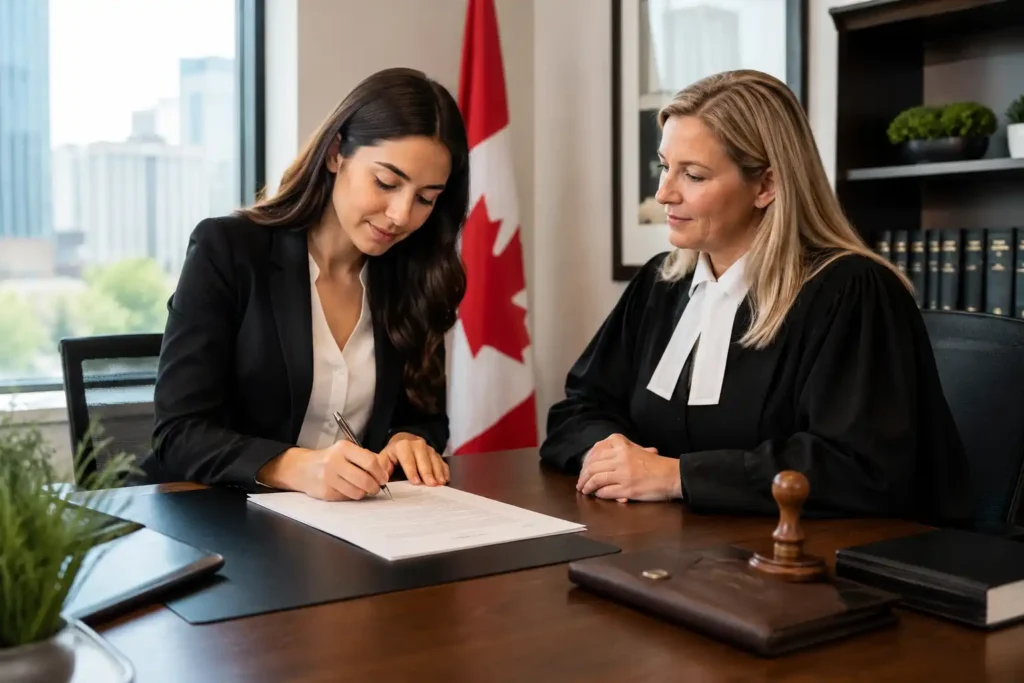
An affidavit is only as good as the person who commissions it. Batra Law Offices helps individuals and businesses across Brampton and Ontario draft, swear, and commission affidavits for court proceedings, family law matters, probate applications, immigration cases, and landlord-tenant disputes. Our team can also handle the Notary Services and Power of Attorney work that often goes hand in hand with an affidavit, so related documents can be taken care of in the same appointment.
Types of Affidavits
Different affidavits serve different purposes: an affidavit of service proves a document was delivered, an affidavit of execution confirms a signing took place, an affidavit of identity confirms who someone is, an affidavit of capacity confirms a person understands what they’re signing, and an affidavit of support states that someone will provide financial support to another person.
Requirements for a Valid Affidavit
A valid affidavit must be written and signed by the affiant, sworn or affirmed before an authorized witness, and contain only facts — not opinions — supported by evidence such as names, dates, and documents. It also needs to be legible, dated, and include both the affiant’s name and address and the commissioner’s name, date, and signature.
Swearing or Commissioning an Affidavit
The affiant takes an oath or makes a solemn declaration before an authorized person, usually a commissioner for taking affidavits, who witnesses the signing and administers the oath or affirmation. The affidavit is only complete once it has been signed and sealed by the commissioner — the same process we cover in more detail on our Notary Services page.
Avoiding Common Mistakes
The most common issues we see are ambiguous language, missing signatures or dates, incorrectly identified parties, and inaccurate or incomplete information — any of which can delay a court filing or immigration application. Having a lawyer review the affidavit before it’s signed helps catch these issues early.
Why Accuracy Matters
An affidavit is a legally binding, sworn document. Perjury — knowingly making a false statement under oath — is a serious offence under the Criminal Code of Canada, punishable by up to 14 years in prison, and can also expose you to civil liability. Accuracy and honesty aren’t optional.
Why Choose Batra Law Offices for Your Affidavit
Experienced affidavit lawyer serving Brampton and the GTA
Drafting and commissioning in the same appointment
Same-day appointments available
Documents accepted by courts, tribunals, and government bodies across Ontario
Legal advice available if your affidavit raises broader questions
Frequently Asked Questions
What is an affidavit, and when do I need one?
An affidavit is a written statement sworn or affirmed under oath before an authorized person, such as a commissioner of oaths, lawyer, or notary public. You may need one for court proceedings, family law matters, probate applications, landlord-tenant disputes, immigration cases, or as proof of service or identity.
Who can witness or commission my affidavit in Brampton?
An affidavit must be sworn or affirmed before an authorized official — typically a commissioner for taking affidavits, a lawyer, or a notary public. Our office can commission affidavits for individuals, families, and businesses across Ontario.
What information does my affidavit need to include?
A valid affidavit must be written and signed by the affiant, contain only facts (not opinions) supported by evidence, and be legible, dated, and complete with the affiant’s name and address along with the commissioner’s name, date, and signature.
Can you draft an affidavit for me, or do I need to write it myself?
We can help draft the affidavit itself, not just commission it — which helps avoid common mistakes like ambiguous language, missing signatures, or incorrectly identified parties that can cause delays.
What happens if I sign an affidavit that contains false information?
Perjury — knowingly making a false statement under oath — is a serious offence in Ontario, punishable under the Criminal Code of Canada, and can also expose you to civil liability. Affidavits must always be truthful and accurate.
Do you offer same-day affidavit and commissioning appointments?
Same-day appointments are generally available — contact our office to check current availability for your document.
Book an Affidavit Appointment in Brampton
Need an affidavit drafted or commissioned? Contact Batra Law Offices today to book an appointment. Call us at +1 905-533-0183 or WhatsApp us to get started.
Note: “The information herein is provided for informational purposes only and should not be construed as legal advice. Read our complete Legal Disclaimer on Website”